

How do porta potties work on a job site?
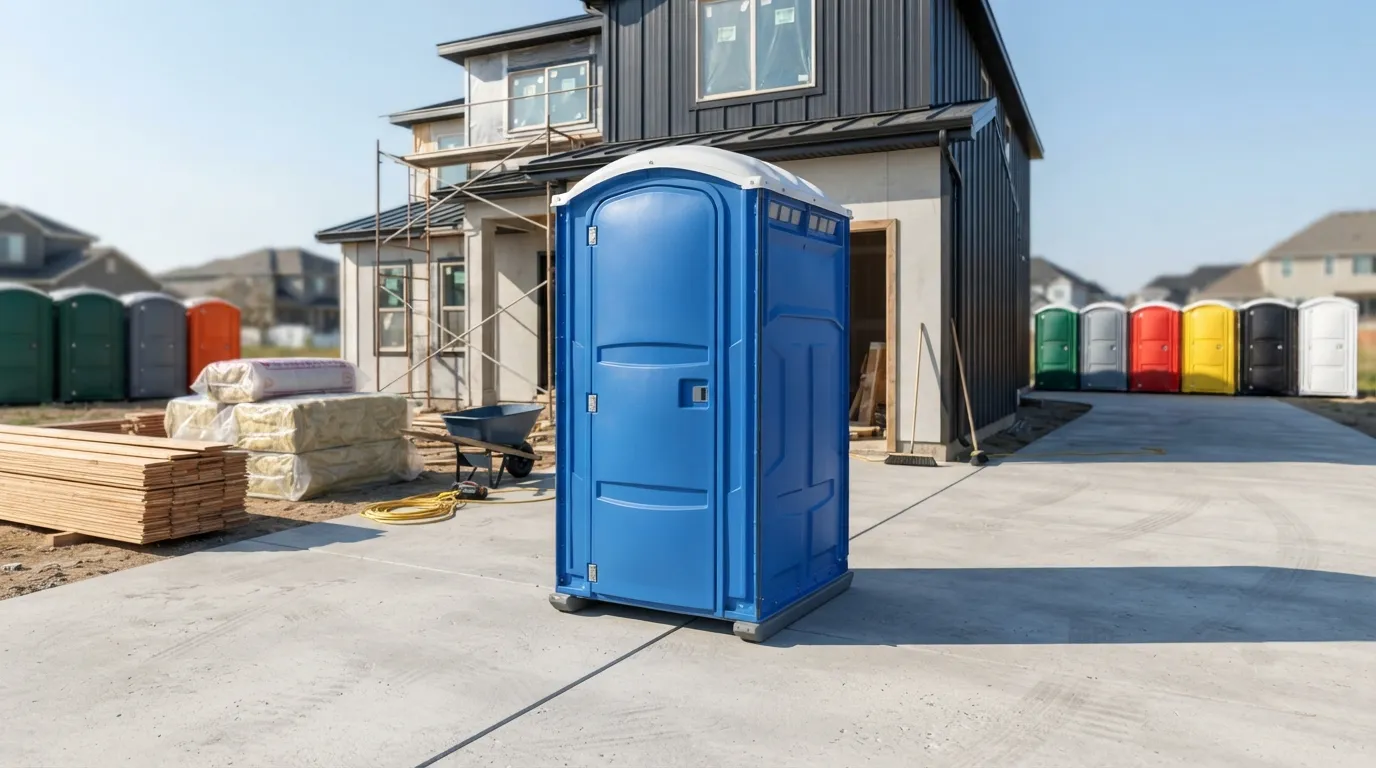
The design is simple on purpose. There's no flush, no water tank, just a holding tank under a molded seat and a chemical charge that goes in at delivery. A construction worker walking to the porta potty on break doesn't need running water nearby, which is the whole point on a site that hasn't had plumbing roughed in yet. The tank holds 60 to 70 gallons and the unit stands about 92 inches tall on a footprint near 44 by 48 inches, small enough to tuck against a fence line without blocking temporary fence rental access. OSHA 1926.51(c) sets the ratio that matters here: one toilet for 20 or fewer workers, stepping up to a toilet and urinal per 40 once crews grow past that. If you're staffing up past a couple dozen trades, how many porta potties do i need walks through the math, and OSHA portable toilet requirements covers the rest of the rule. Most contractors in North Charleston rent standard porta potty rental units and add a handwashing station rental nearby, since the toilet itself carries no sink.
How does a portable sink work next to a porta potty?
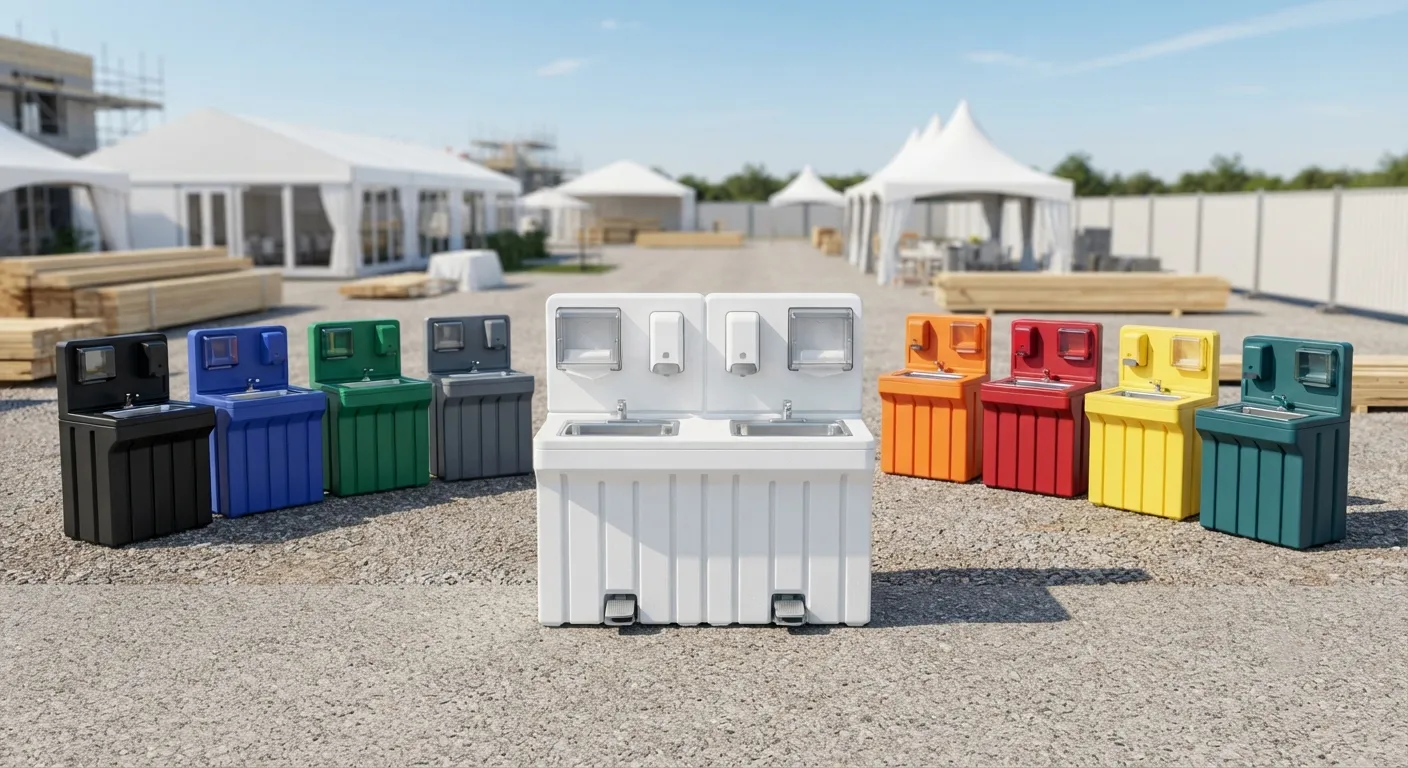
A portable sink runs on a self-contained fresh water tank and a foot pump or gravity valve, no hookup required, and it pairs with the toilet rather than living inside it. Wastewater drains into a separate holding tank underneath, and the unit gets refilled on the same visit as the toilets. This matters because 29 CFR 1910.141(d)(2) requires soap and towels at washing facilities, and hand sanitizer doesn't satisfy that rule on its own. A portable sink rental or a standalone hand sanitizer station rental fills that gap fast, and if the crew is spraying paint, coatings, herbicides or insecticides, OSHA 1926.51(f)(1) requires washing facilities for that specific exposure, not just a general sink. Check handwashing requirements before you scope a bid in North Charleston, because inspectors do ask.
How do flushable porta potties work?
A deluxe flushable unit uses a small onboard freshwater tank and a hand pump or foot pedal to push a rinse of water through the bowl after each use, dropping waste into the same sealed holding tank as a standard unit. It feels closer to a real bathroom, which is why deluxe flushable porta potty rentals show up at weddings and corporate events more than on framing crews. An ADA accessible porta potty works the same way internally but adds a wider door and a turning radius, matching ADA Standards 304.3.1's 60 inch turning circle and the 32 inch clear door opening required under ADA Standards 404.2.3. ADA Standards 213.2 requires that when single-user units are clustered, at least 5 percent of them, and never fewer than one, meet that accessible spec. For anything bigger than a handful of units, a full restroom trailer rental or a 2 stall restroom trailer gives guests running water and real flush plumbing instead of a hand pump.
Do camping porta potties work the same way?
Not quite. A camping porta potty is a small personal unit with its own tiny holding tank, usually chemical-treated and dumped by the owner rather than serviced on a route. Rental units for group camping or a weekend outdoor event work differently, closer to standard job site units, with a technician pumping the tank and recharging the chemical on a fixed schedule rather than leaving it to the renter. ANSI/PSAI Z4.3 sets a baseline service interval of once a week for up to 10 users across a 40 hour week, which is the starting point most companies quote from before adjusting for event size. For a weekend rental in North Charleston, a standard unit typically runs in the range below, and pricing depends heavily on duration:
| duration | typical range |
|---|---|
| day | $100 to $350 |
| weekend | $125 to $400 |
| week | $130 to $500 |
| month | $125 to $325 |
Longer rentals cost more in total but less per day. See porta potty rental cost and porta potty rental per day for how that breaks down, or monthly porta potty rental if you're staffing a project for weeks rather than days.
What chemicals go in a porta potty?
The blue liquid in the tank is a deodorizing and digesting chemical, usually a quaternary ammonium or formaldehyde-based blend, that breaks down waste and masks odor between service visits. It's added at delivery and topped off at each pump-out. If you're searching for portable toilet chemicals near me because you're trying to service a unit yourself, most rental companies handle that as part of the route instead of selling chemical separately.
How often does a porta potty get serviced?
Standard service runs once a week for lighter use, matching the ANSI/PSAI Z4.3 baseline, but high-traffic sites or events often need two or three visits a week. See how often are porta potties cleaned for the detail on what a service visit actually includes.
Do porta potties smell if they're maintained?
Some odor is normal in South Carolina heat, but a well-serviced unit with fresh chemical shouldn't be overwhelming. Do porta potties smell covers what's normal and what signals a unit needs an extra pump-out.
Can I get a porta potty delivered same day in North Charleston?
Often yes, depending on route timing and inventory that day. Emergency porta potty rental covers rush delivery, and it's worth calling early if your event is this weekend.
Is a septic tank the same system as a porta potty tank?
No. A septic tank is a fixed underground system typically pumped every 3 to 5 years, while a porta potty tank is portable and serviced weekly. Septic pumping service and how often to pump a septic tank cover the fixed-system side.
Next step
Get a delivery date
Tell us the address, the dates and the headcount. We size the order and confirm the route.